The Company Wiring Map
You hired good leaders. So why does the friction keep coming back?
Most leadership teams can name the friction but not explain it, because the problem is rarely the people and almost never the org chart. It is how the people are wired, and how that wiring lands on each other under pressure. The wiring map makes that visible in one picture, so you can stop guessing and start deciding.
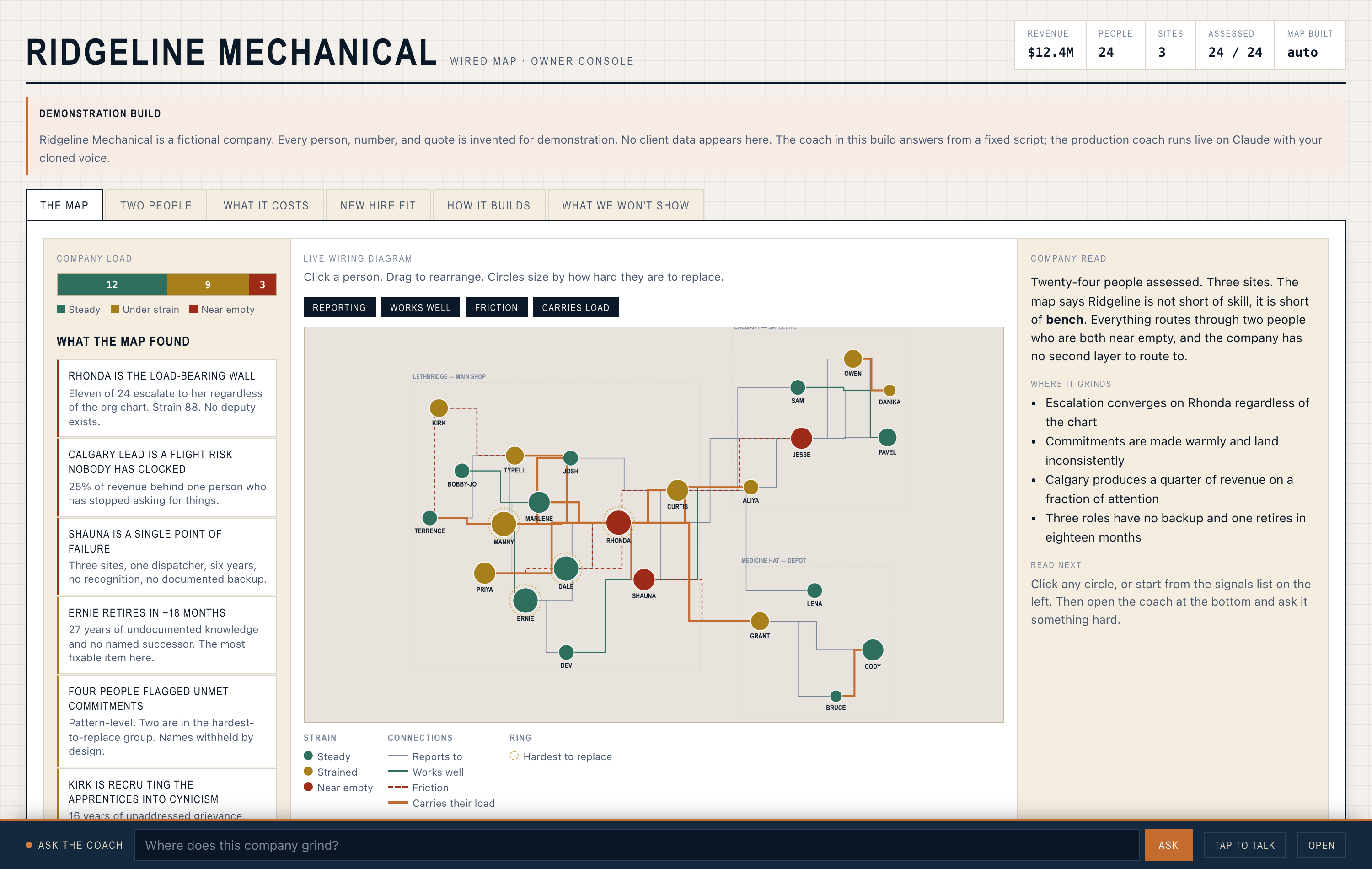
A live wiring map. The company is fictional, the product is real.
Walk the map before you buy
This is what you are looking at on the call
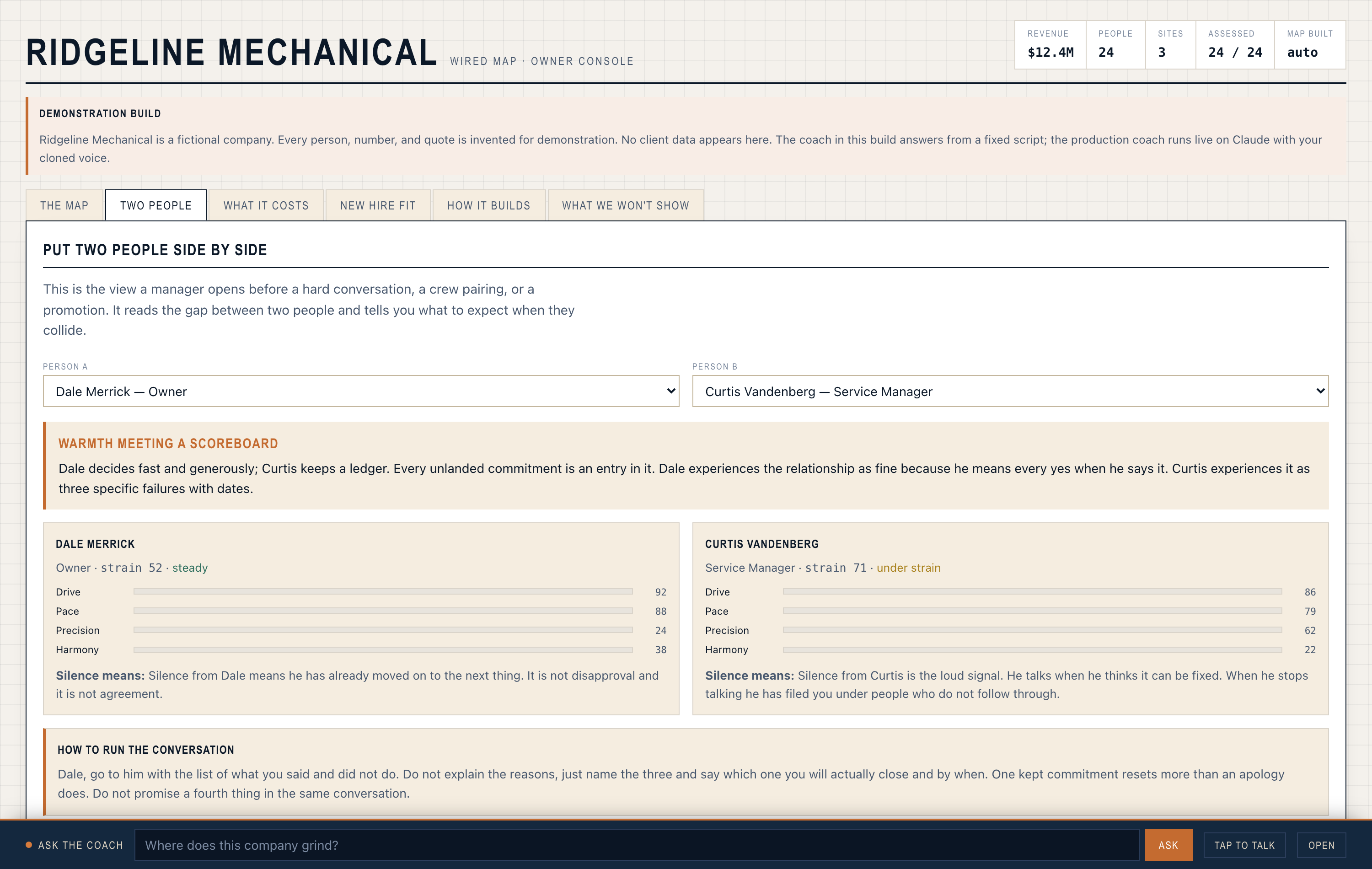
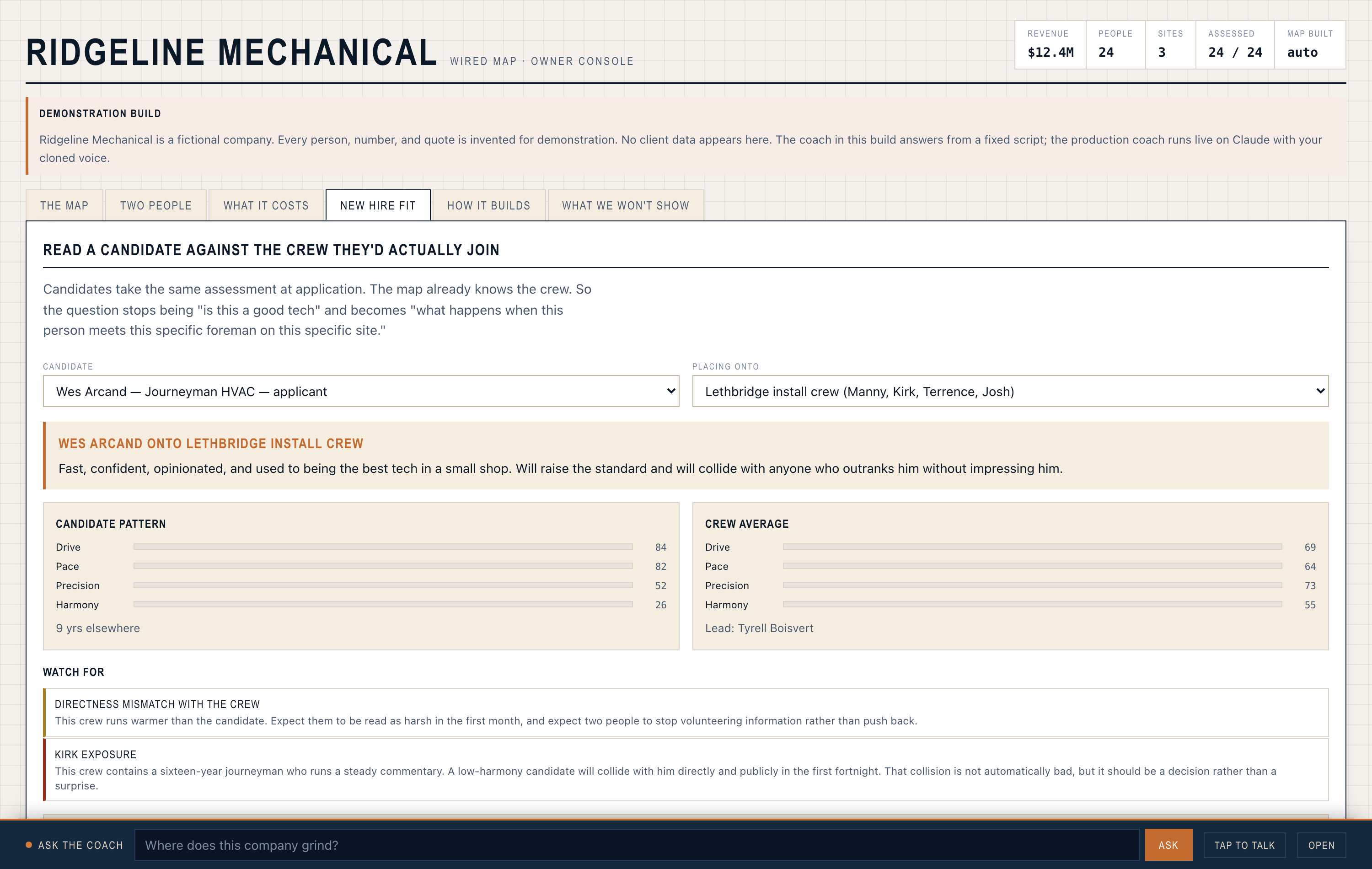
Ridgeline Mechanical is a fictional 24-person company built to show the real product. Every screen below comes straight from the working map.
What you get
What you actually get
Every leader assessed
Each person on your leadership team takes the assessment and gets their own private report. It is theirs, written to them, and it is worth having on its own.
One map of the whole company
Everyone on one picture, with the reporting lines, the strong working pairs, and the places where two people are quietly grinding against each other. You can talk to the map and ask it about a person, a pairing, or a restructure you are considering.
A ninety minute readout, with Christopher
We sit down and go through it together. Not a slide deck handed over at the end, a working conversation about what you are looking at and what you should do about it.
A written company read
The whole thing in plain language you can act on, and re-read in three months when the next decision comes up.
Twelve months of access
The map stays live for a year, and so does the coach built into it. When you are weighing a hire or a seat change, the picture is already there.
New people, added as you go
Assess someone you are thinking about hiring and see how they would land on the team you actually have, before you make the offer.
What it costs
$20,000 USD for up to twelve leaders.
- The wiring map engagement$20,000
- Each additional person$1,000
Being straight about what is not in that number, because the last thing you need is a surprise later. Ongoing coaching is separate. An interim operator engagement is separate. So is a standing new-hire read once the twelve months are up. If any of those turn out to be the right next thing, that is a different conversation and a different price.
Who it is for
Who this is built for
Leadership teams in companies of roughly 20 to 500 people. The pattern is nearly always the same. The company grew, the leaders know every person in it by name, and the growth has quietly outrun the structure. Decisions still land on the same few desks because nobody is quite sure who else they belong to, and the people carrying the most are the ones closest to burning out.
If your leadership team has no friction and every seat is obviously right, you do not need this and I will tell you so on the call.
Plainly
What it is not
It is not a personality quiz.
Nobody gets a colour, a letter, or a type they carry around like a name tag. The read is about how you work, where you struggle, and what you need from the people around you.
It is not a score on a person.
There is no number, no ranking, and no verdict on anyone. It is a coaching instrument, not a selection test, and it should never be the only reason you move on someone or move them out.
It is not done behind their backs.
Everyone takes it themselves and gets their own report. What the map shows you about the team is a pattern read, not a private file on each person.
Company briefing
Start with a conversation, not a contract
For leadership teams weighing a company engagement. A private sixty-minute conversation with Christopher, by video call. No contract, no commitment. Leading on your own? Start with the assessment.
- Why leaders request one
- Growth has outrun how the leadership team works together. Decisions stall, the same friction keeps coming back, and the people at the top are the bottleneck without anyone saying so.
- What happens in the hour
- We look at how your leadership team works under pressure, and whether the Company Wiring Map is the right next step. If it is not, we will say so.
- What you leave with
- One named pattern to work on, and one thing to do in the first 24 hours to start engaging it.
- What to bring
- Nothing to prepare. If you like, tell us what is going on when you book, or in the form on this page.
From there: add more leaders to the assessment, or book a walk-through of the results with Christopher.
Identity Regulation Legacy